Interviewed by Dr Liz Watkins, 12th February 2026
Digital images increasingly form the first point of access to archives of analogue film and photographs, however, each of these seemingly ubiquitous files has its own provenance and can be produced by variously complex workflows. This interview focusses on the work of Scan2Screen as a company that is innovative in its use of digitization and multi-spectral scanning as conservation and restoration techniques for historic film colours and early colour processes in photography. Scan2Screen has emerged through the work of several major interdisciplinary research projects led by Professor Barbara Flueckiger as Professor of Film Studies at the University of Zurich 2007-2023, now Professor Emeritus. These projects include Timeline of Historical Colors in Photography and Film which developed from Flueckiger’s research on Film History Re-mastered at Harvard University and through ERC Advanced Grant FilmColors project.
Barbara Flueckiger is founder and CEO of Scan2Screen. The company was formed in response to a technical review which found that some commercial scanners are unable to capture the full width of the analogue film print, cutting off manufacturer’s marks, perforations which vary in shape and size, date codes, and edge codes. Further, that some film colours remain outside of the gamut of hues that commercial scanners are able to record. Throughout these projects, Flueckiger’s research has focused on the effects of ‘the transformation of historical films as tangible objects by the processes of digitisation.’[i] The research has highlighted and analysed the effects of the digital workflows, which form part of the provenance of film images as they are scanned and then accessed via DVD, Blu-Ray, or online streaming. Vitally, the projects explore the effects of digitisation processes on ‘intangible’ colours in aesthetic and textual analyses of film.[ii]
Scan2Screen spans methodologies in the sciences and arts – from archival research to technical and theoretical analysis. Each workflow and exhibition – Color Mania Exhibition at the Fotomuseum Winterhur 2019 and Color in Motion: Chromatic Explorations of Cinema at the Academy Museum of Motion Pictures 2024-25 – has been informed by an interest in the emotional and psychological significance of the ‘material properties of digital images’ and film colours on the ways we access, view and study film and photography now.[iii
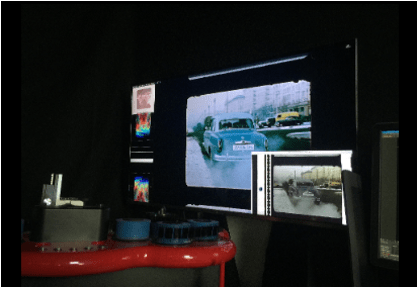
Figure 1: (left) Scan2Screen, examining digital scans of analogue film. (right) Scan2Screen homepage.
Digitization: tangible materials and intangible colours.
Liz Watkins: Scan2Screen has developed a ‘Multi-sourced Aesthetic Transfer’ (MAT) process, which not only references the film negative for dynamic range and sharpness, but incorporates multispectral scans of numerous release prints.[i]
Your research projects have demonstrated that the digitisation processes of commercial scanners can be ‘colour blind’, and, can efface dust and scratches from the digitised image. However, fingerprints, small tears and dirt are specific to each filmstrip, photosensitive emulsion, dyes etc as tangible materials: a record of its material past.
Could you tell us more about the work of Scan2Screen with multi-spectral scanning as it addresses these issues.[ii]
Barbara Flueckiger: When I worked as a consultant on several commercial restoration projects (ranging from colour analysis for the digitization of The Cabinet of Dr. Caligari to several early Agfacolor films) it became evident that colour reference is a major challenge.
Traditional scanners do not capture the full colour spectrum present in colour film stocks, and their output is further compromised because of internal postprocessing that does not adhere to core principles of restoration ethics. In other words, practices that are well established in art restoration – such as the scientific study of an artwork’s material foundation and science-based protocols governing interventions – are largely absent in film restoration.
Because of this lack of a science-backed foundation, workflows must rely on compensatory steps that are both time-consuming and prone to subjective interpretation. Traditional scanning workflows often require days of colour grading based on visual inspection of film elements on an inspection bench. However, the human visual system cannot perceive colour in absolute values, and illumination conditions greatly influence perception. Viewing film elements under yellowish bench lighting, for example, differs significantly from projection under Xenon illumination.
Scan2Screen’s science-based concept addresses these challenges through a sophisticated, transparent, and well-documented methodology. Using multispectral illumination, we capture the full spectral range present in film stocks. Our software then reconstructs the colours by combining the resulting scans – a series of black-and-white images representing individual spectral bands – into a final colour image calculated with measured cinema projection light.
‘Multi-sourced Aesthetic Transfer’ (MAT), or style transfer, recognizes that archivists, restorers and curators frequently work with diverse source materials while also accounting for the differences between negatives and distribution elements. Original camera negatives do not contain the final colour information found in reference prints. During colour grading, negatives are corrected for shot-to-shot variation and altered for aesthetic and narrative intent. Positives also differ from negatives in spectral characteristics and density. Because traditional scanners were initially developed for negatives, they are not well equipped for positives. Scan2Screen’s multispectral process allows us to extract highly accurate colour references from positives and transfer those characteristics onto scans of negatives.
LW: Film archives and museums work to balance the retention and preservation of master copies and negatives with need to facilitate access to their collections through release prints that are made available for circulation. The MAT process places value on circulation prints that have been colour graded and edited. Throughout your projects, have you seen a change in the approach that archives and museum collections take to retaining release prints, or duplicate release prints?
BF: In practice, positives make up the vast majority of film elements held in most archives, for historical reasons. While there were usually only one or, rarely, two camera negatives, many positives were produced for circulation, often globally. Negatives were thus far more vulnerable to loss due to fires, archival malpractices, wars or institutional changes. Nitrate negatives were even deliberately destroyed because they were considered fire hazards. As a result, restoration work often depends on what survives, which can be far from ideal. We experienced this first-hand during the restoration of Münchhausen, one of the most prominent films shot on early Agfacolor, where the loss of the original camera negative required us to integrate fragmented elements.
In the past, archives assumed that creating duplicate negatives or intermediate safety-film elements would ensure long-term preservation. However, these materials proved susceptible to dye-fading and were inherently ill-suited to preserving the colour aesthetics of earlier or non-chromogenic processes, including Technicolor.
That era has passed. Archives today are much more careful in preserving original elements, even those made from highly flammable nitrate cellulose. With proper care and storage conditions, nitrate films can remain stable for more than 100 years. We recently scanned a hand-coloured serpentine dance film from 1905 that was in pristine condition; an impressive testament to careful preservation!
LW: Scan2Screen can adjust the appearance of digitised film to visualise its appearance as it would appear through different light sources (eg. xenon or carbon arc) used in cinema projectors.[iii] It visualises the quality of light and colour specific to different instances of historic film exhibition. This is such an important shift in making the history of film and its exhibition accessible to audiences beyond specialist film festival and archival screenings.
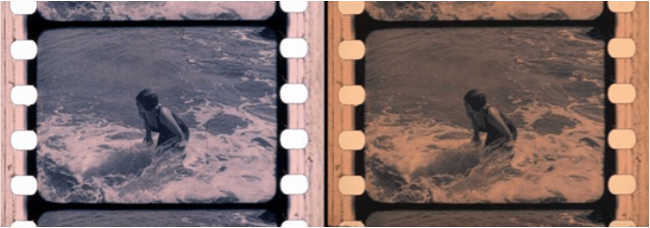
Figure 2: Caption: Rendering is calculated based on the measured spectra of various cinema projections. Comparison of xenon light (above left) versus carbon arc (above right) (see: Flueckiger, Trumpy et al 2025 p.78).
The side-by-side comparison of a digital image that has been adjusted to two different light sources is remarkable.[i] It offers a view of historic film colour that could not easily be accessed in any other way.
What has the response from specialist audiences – such as archives, silent film festivals– been like? Has it been possible to show the side-by-side comparison in a museum or gallery context for a broader audience of researchers and cinema goers?
BF: As part of our research, we conducted side-by-side projections with interdisciplinary focus groups to evaluate results and determine the optimal number of spectral bands needed. More recently, I completed an in-house study with my colleague David Pfluger, scanning the Gert Koshofer Collection – over 150 film samples representing a wide range of historical colour processes. This broader dataset allowed us to explore the strengths and limitations of our approach, with highly convincing results.
In November, while scanning at the George Eastman Museum, we had the rare opportunity to compare our scan directly with a nitrate screening of The Flute of Krishna.
Based on these evaluations, I am confident that our colour accuracy exceeds 95%.
Such comparisons, however, are difficult to replicate outside specialized environments. While photographs of the tests can be taken, they fail to capture the true visual experience. There is currently no reliable method to fully document the perceptual impression of these butterfly projections.
LW: ‘Shattered Provenance’ explores the ‘material foundations’ of early colour films’ and the importance of documenting the provenance of digital images.[ii] How is the workflow (negative, multiple release prints, their archives) of Scan2Screen documented? Is there the scope, or has it been possible, to show this in exhibitions?
BF: We collaborate with leading institutions including the Academy Museum of Motion Pictures, the British Film Institute National Archive, and the George Eastman Museum, as well as organizations such as San Francisco Film Preserve and the Art Institute of Chicago. We consistently find that the most forward-thinking institutions are also the most open to adopting new technologies like ours.
Our work is meticulously documented in a purpose-built database. All colour management parameters, ranging from the spectral power distribution of our LED illumination system to the measured projection-light spectra used for rendering, are embedded as metadata. This ensures complete transparency and intersubjective accessibility.
LW: Scan2Screen focuses toward images that offer the ‘authentic colours’ of photographs and films. The scanning process uses sources including a negative (for a full dynamic range of light and shadow), identifies a median of different release prints (to accommodate the colour grading and editing during postproduction), and LUTs (Look Up Tables). The film’s aesthetic can also be understood through its social, historical and political context. What role have inter-departmental communications in film laboratories, correspondence between filmmakers and cinematographers, colour notes in scripts, or film reviews played in this process?
BF: To clarify: we don’t specialize in scanning negatives; that remains the domain of traditional scanners.
Our method is instead agnostic to the color stock on the scanner. It applies the same science-based workflow and accuracy regardless of the element being scanned.
This does not diminish the importance of historical knowledge or curatorial judgment. Quite the opposite! Scan2Screen’s strength lies in its interdisciplinary foundation, built over nearly two decades of research. My own work began with film-historical investigations into the relationship between technology and aesthetics, later expanded through the expertise of my collaborators and co-founders of Scan2Screen.
Giorgio Trumpy has been central to our colour science, image processing and physical investigation of colour film materials. Lutz Garmsen, our systems and software engineer, brings experience as an experimental filmmaker and designer. David Pfluger combines academic training in chemistry with archival and restoration practice. Martin Weiss contributes cinematographic expertise and media scholarship, and Julius Muschaweck specializes in illumination optics.
While technical precision is essential, aesthetic judgement and deep historical knowledge remain equally critical in our work. In more humanities-oriented projects, I have continued exploring these dimensions with PhD students and postdoctoral researchers, studying large film corpora and their institutional and cultural contexts.
LW: The Timeline of Historical Colors in Photography and Film includes some examples of “China Girl” or “Shirley Cards”, which show colour swatches and grayscale cards, and, offer a point of reference for colour grading throughout the processing, developing and printing of photochemical film[iii]. Have you encountered any China Girl images in the films digitised by Scan2Screen? If so, do they offer a point of reference for understanding the effects of colour fading in the digitisation of authentic colour films?
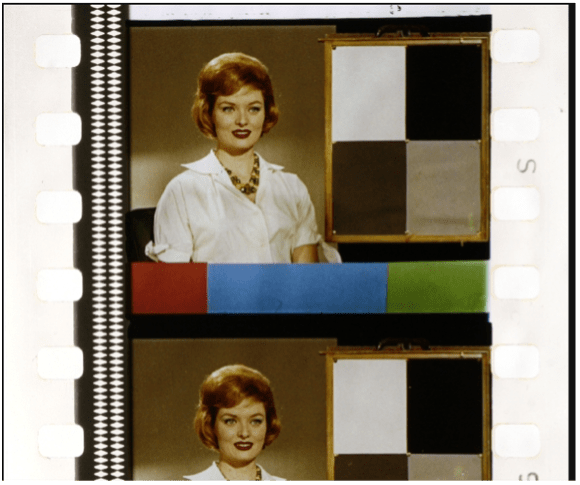
Figure 3: (above) LAD girl. Credit: Harvard Film Archive, Brandon Film Library Collection, item no.13658. Film: Il Deserto Rosso (1964). Photograph by Barbara Flueckiger
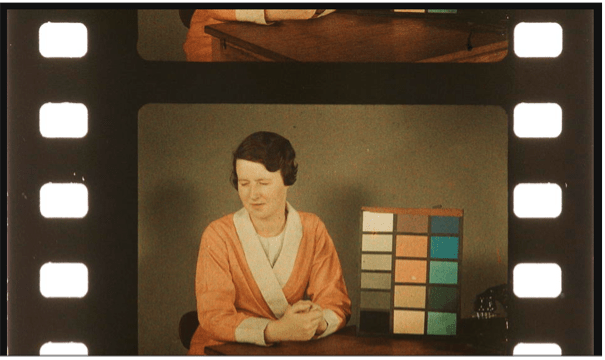
Figure 3: (above right) LAD girl. Credit: Harvard Film Archive, Brandon Film Library Collection, item no.13658. Film: Il Deserto Rosso(1964). Photograph by Barbara Flueckiger (above right) Dufaycolor China Girl or Shirley Card from the Kodak film samples collection: National Science and Media Museum Bradford. Photographs by Barbara Flueckiger.
BF: Yes, we maintain several historical colour charts in our collections, particularly within the aforementioned Gert Koshofer Collection. Years ago I also had access to additional charts through Liz Coffey, who was then working at the Harvard Film Archive.
These colour charts reveal how little standardization existed in early colour reference systems; far from what modern scientific calibration would demand.
Recent scholarship has also highlighted the gendered and racial biases embedded in these materials. Most of these charts featured white women with fair skin to demonstrate a film stock’s tonal balance, effectively excluding other skin tones. This bias was built into the technological development of colour film from the outset.
Two of my PhD students, Noemi Daugaard and Josephine Diecke, conducted in-depth research into these discursive, societal, and institutional dynamics, producing outstanding theses on how such these power dynamics shaped the development of colour film technologies.
Film materials and digital analysis.
LW: The microscopy project, which you organised between HTW Berlin and the University of Zurich, offers an incredible level of detail showing the grain of the film. Some changes in film materials occur over time, while others register the conditions of filming (lens flare, halation, humidity and condensation, the duration of exposure as a balance between image definition and colour resolution), the residual trace of film laboratory processes (dye sediment, liquid marks), and storage (layers of emulsion and dye peeling, deacetylation or ‘vinegar syndrome’ in some chromogenic films causing dyes to fade leaving a magenta image).
Did you find any unexpected examples or recurring patterns of fading or damage during these projects?
Is there a database of examples of anomalies or the types of damage and decay found in different colour processes?
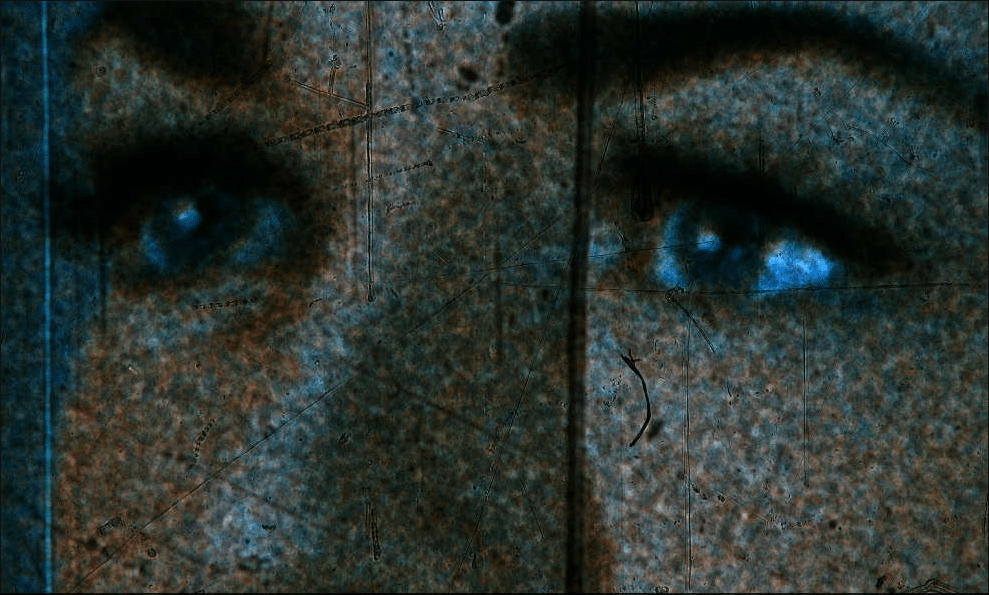
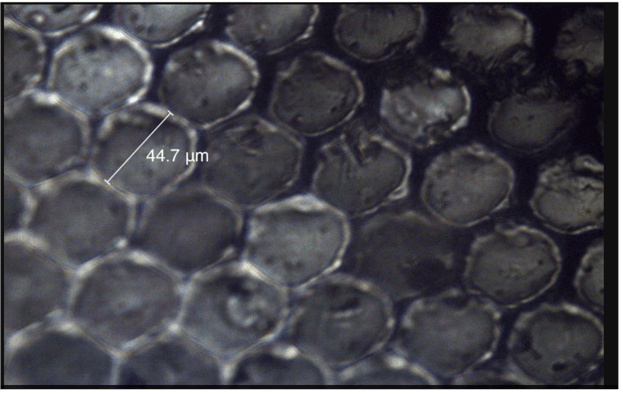
Figure 4 (above left) image of the grain of the film: Cinecolor, two-colour, 1932-1950 using microscopy. Credit: Gert Koshofer Collection. Sample No.17. Photomicrograph by Sreya Chatterjee, HTW Berlin. (above right) Hexagonal structure of the lenticular surface of the Keller-Dorian lenticular film. Microscopy revealed the lenticular surface, as part of an embossed screen-like process, which enabled colour information to be registered in combination with black-and-white film. Credit: David Pfluger, ERC Advanced Grant FilmColors. Imaging was performed with support of the Center for Microscopy and Image Analysis, University of Zurich.
BF: Yes, each individual colour film process exhibits its own patterns of decay, artifacts, or blemishes. Personally, I find these imperfections aesthetically compelling. Decay often reveals the material foundations of film, reminding us that it is both object and medium.
Careful attention to these material traces is one of the most foundational aspects of our work. They are often visible in non-image parts of the film, particularly in the perforation area.
When digitization workflows erase these traces – through excessive retouching or by excluding them in the scanning process –, we lose essential indicators for identifying film stocks and reconstructing their histories and genealogy.
Therefore, our scanner captures the full film edge to edge, preserving as much material information as possible. Digitization inevitably sacrifices three-dimensional texture, but my dream is to create full representations that reflect film’s layered physical structure: base, emulsions, dyes or metallic compounds, as faithfully as possible.
Curating a Database.
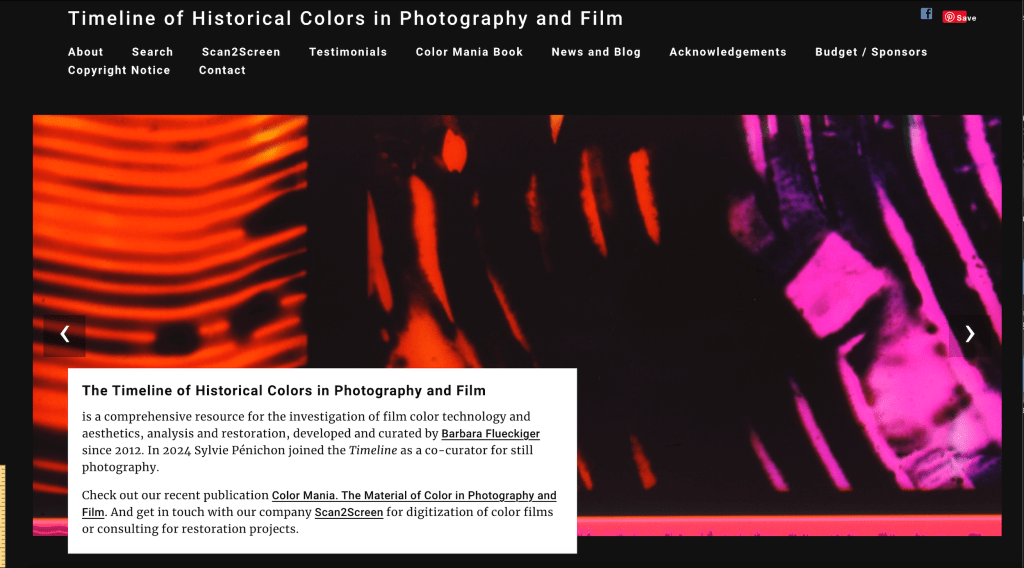
Figure 5: home page of the Timeline of Historical Film Colors in Photography and Film.
LW: The Timeline of Historical Colours in Photography and Film is a vital resource offering more than 250 examples of different colour film processes, from the applied colours of silent film to Dufaycolor, Ansco Coloor, the Technicolor innovations in dye imbibition printing and design, Eastmancolor, Agfacolor and so many more. It’s made the nuanced variations in the materials and aesthetics of colour films, which were for many years primarily only available through archival research and screenings, more readily visible for researchers. The processes are seen as film fragments, individual frames with important metadata such as technical and historical details including a link to the archives that hold them.
The database offers multiple ways of understanding and searching the history of colours in photography and film including:
- Timeline Graph of colour techniques (1890s -2000s)
- Classification System of autonomous (applied) colour techniques, mimetic processes (natural colours) such as additive and subtractive colour technologies
- Sections dedicated to edge codes and identification, theory and a bibliography
- Searchable by colour, tag cloud, contributing archive
What were the main challenges that you encounter in the scanning and curation of so many different colour processes, formats and the varying requirements of researchers?
BF: Institutional access posed early challenges. Some archives hesitate to grant researchers access to fragile film materials. As I became more established in the field and could demonstrate that I have the knowledge and experience to handle delicate film elements, access improved though barriers remain.
One of the reasons is that many film archives are brutally understaffed and underfunded. Hosting researchers adds strain to already stretched resources.
Funding was another major obstacle. International archival research is expensive, and much of the early work was self-funded or supported through crowdfunding. Ironically, once the Timeline project gained visibility, funding became even harder to secure, as agencies often prefer to support new initiatives.
Despite these setbacks the Timeline remains one of the most fulfilling projects of my career, second only to Scan2Screen, which would not exist without the connections and knowledge the Timeline project fostered.
The Curation of Colour, Photographs and Films for Exhibitions.
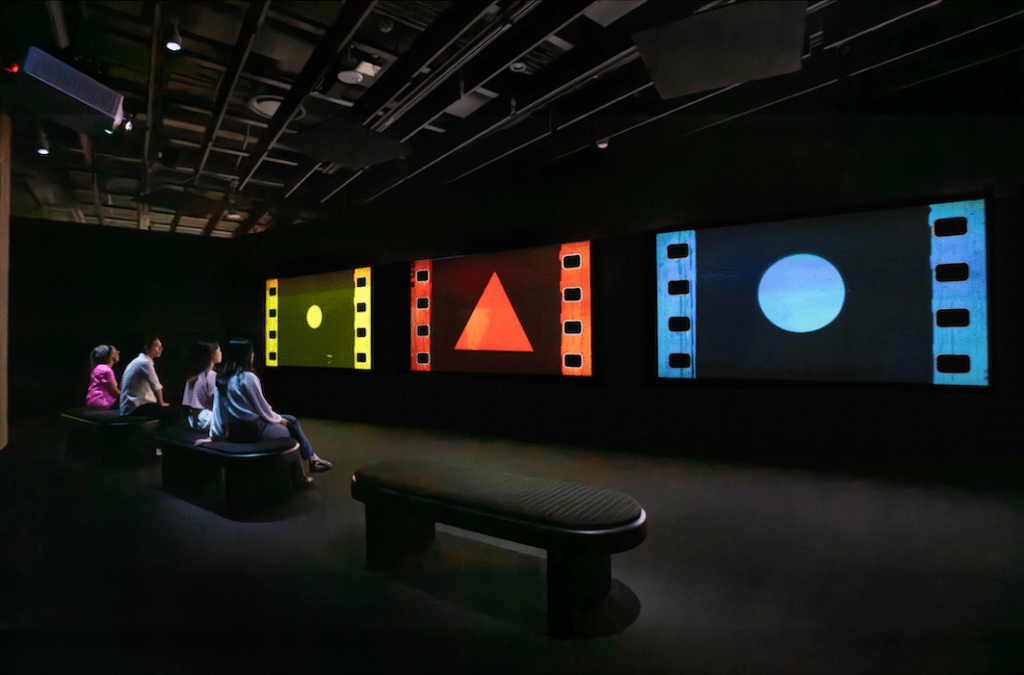
Figure 6: Color in Motion: Chromatic Explorations of Cinema at the Academy Museum of Motion Pictures. Image credit: Scan2Screen.
LW: The digital scans of photographs and films produced by your projects and most recently through the work of Scan2Screen have formed the basis of exhibitions in galleries including Colour Mania- Materiality of Color in Photography and Film Exhibition at the Fotomuseum Winterhur in Zurich 7th September 2019-24 November 2019 and Color in Motion: Chromatic Explorations of Cinema at the Academy Museum of Motion Pictures in Los Angeles 6thOctober 2024-13th July 2025. The exhibitions are innovative in their inclusion of digital scans printed in largescale formats, organised alongside objects (costumes, objects) in a colour spectrum, and in immersive installations.
What inspired the exhibition the digital scans and photographic materials in this way?
What questions do these exhibitions invite their visitors to ask about colour, film and their technical history? Have you found that the presentation (scale, physical materials, digital screens, the projection of light) of the colour film images in an gallery, affect or inform visitor experiences and spectator perceptions of archives, material history of film and its exhibition?
BF: Collaborations with museums have been very satisfying on so many levels. Public audiences often have very limited exposure to film as a material object, yet direct encounters generate strong fascination and connection.
This insight led to the Color Mania exhibition, supported by a Swiss National Science Foundation grant and realized with the Fotomuseum in Winterthur. Director Nadine Wietlisbach, embraced innovative approaches to presenting colour film processes. The immersive light-box installation and integration of contemporary artworks created multiple entry points for diverse audiences.
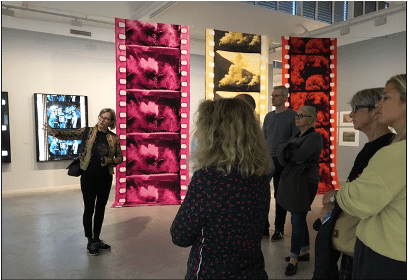
Figure 7a (above) Prof. Barbara Flueckiger in collaboration with the Foundation FOCAL Exhibition Color Mania at the Foto Museum in Winterthur. 2019. Photograph: Angela Rohrer.
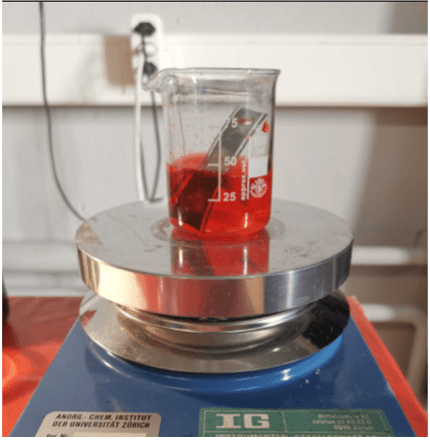
Figure 7b (above) A film colouring workshop at the Color Mania Exhibition enabled participants to color film samples with historical recipes. The strips of film were then projected on to a screen. Workshops were given by Prof. Dr Ulrich Ruedel, HTW Berlin. Photograph: Prof. Dr. Josephine Diecke.
Later, Senior Curator Jessica Niebel invited me to join the advisory board for Color in Motion exhibition at the Academy Museum of Motion Pictures alongside other film colour specialists such as Professors Ranjani Mazumdar, Kirsten Moana Thompson, and Joshua Yumibe.[i] I contributed historical context, staff seminars, and selections for their monochrome installation. When Scan2Screen launched, we were able to produce multispectral scans for this installation. Jessica Niebel supported the idea that we scan these clips directly in the film archives to provide authentic scans with Scan2Screen’s multispectral technology. Initially we had planned to produce only a part of the film clips for the installation, but once they saw our results the Academy Museum’s curators were so impressed that they decided to order all the film clips for the installation, 73 in total from four archives, Eye Filmmuseum in Amsterdam, the Library of Congress in Culpeper VA, the German Bundesarchiv in Berlin, and Lichtspiel / Kinemathek in Bern, Switzerland.
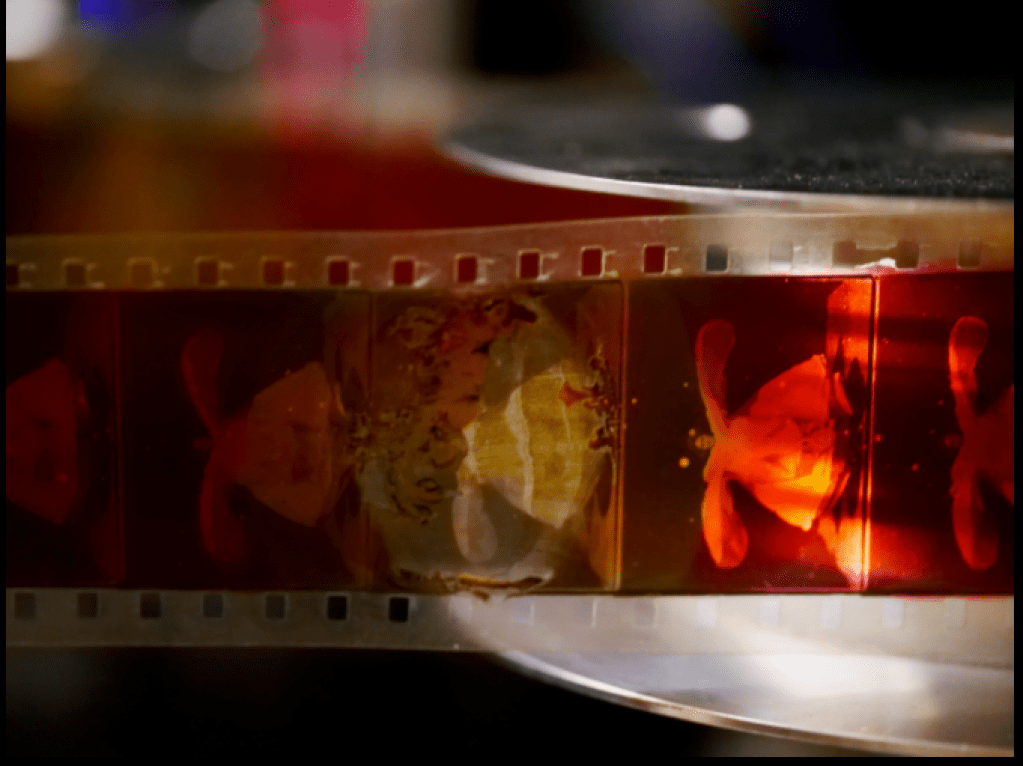
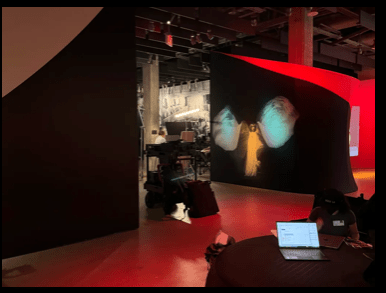
Figure 8: (above left) Annabelle Butterfly Dance (USA 1897, William K L Dickinson; William Heise; Annabelle Moore). Courtesy of Library of Congress. Hand-colored nitrate print with 4 – 5% shrinkage. (above right) Annabelle Butterfly Dance as part of the Color in Motion Exhibition at the Academy Museum of Motion Pictures 2024-25.
The curatorial team created an excellent exhibition consisting of several parts, starting with colours and movement in dance scenes / musical, a technical exhibition consisting of cameras and other equipment, a dye collection used for various colour film processes, a costume exhibition representing the full colour spectrum and finally an immersive experience with experimental approaches to colour in film.
The overall experience was incredibly rich and multi-faceted. I was able to give several tours for diverse visitors and all of them were impressed with the scope and aesthetics created by the curatorial team.
Also a stunningly beautiful catalogue was created by Jessica Niebel, Sophia Serrano and the Museum’s publishing team.
Participating in this project was certainly a career highlight.
LW: What’s next for Scan2Screen? any projects that you can share with us?
BF: We recently received permission to announce one of our most prestigious and fulfilling projects yet: scanning Len Lye’s experimental, avant-garde films in collaboration with San Francisco Film Preserve and the British Film Institute National Archive.
Len Lye was a pioneer of colour experimentation in the 1930s, working with Dufaycolor, Gasparcolor and Technicolor No. IV while creating hand- and stencil-coloured direct animations. This project allows us to compare how different processes translated his original hand-painted imagery.
Colourimetric analysis reveals striking differences between these systems. During research, I encountered an original hand-painted and stencilled test film of Colour Flight, while other originals have deteriorated beyond recovery, underscoring the urgency of documentation. I inspected the original of A Colour Box and there is just a brown block of solid dusty nitrate film left, beyond repair.
Digitization — even a sophisticated one like our multispectral scanning method — can never replace film material, but it provides a scientifically grounded record of works that may otherwise disappear.
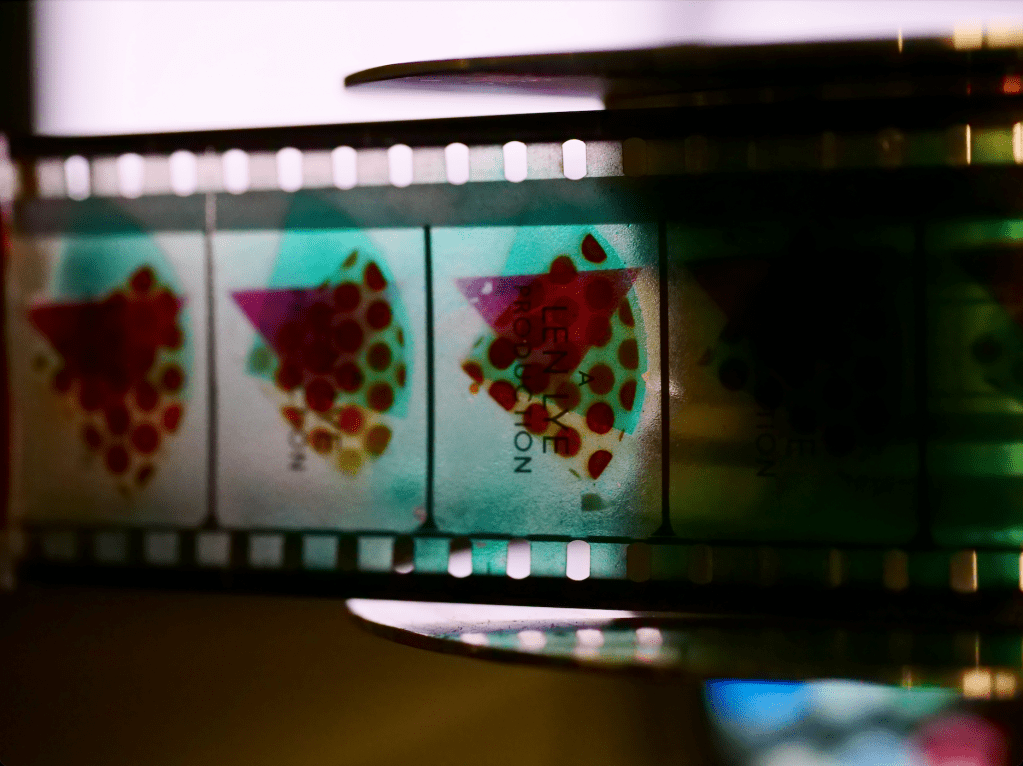
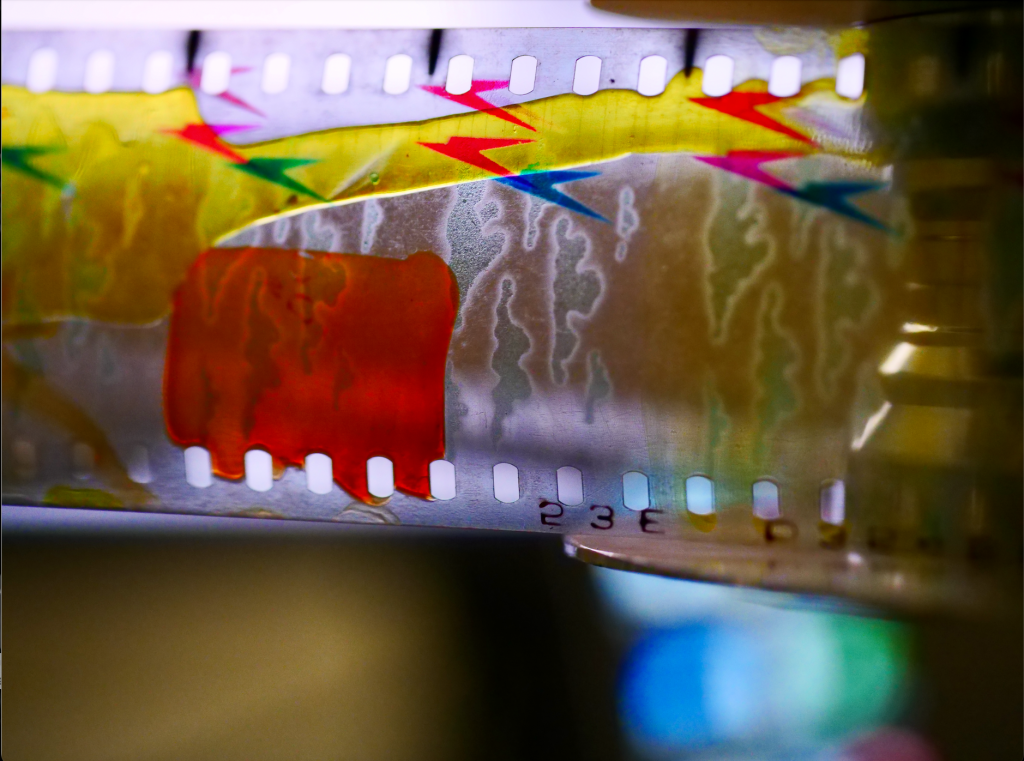
Figure 9: (above) Scan2Screen are collaborating with the BFI and the San Francisco Film Preserve to restore the works of Len Lye. Image credit: Scan2Screen.
We have also scanned some rare and stunning films at the George Eastman Museum, again in collaboration with San Francisco Film Preserve. One of them is a beautiful example from the Great Events Series in Technicolour No. III, featuring exquisite camera work, lighting, costume, and set design, produced in 1928.
And to add to our love for experimental films, we were entrusted with the digitisation of an utterly fascinating hand-painted original, 122 m of continuous painting representing a movement around the globe along the 52° parallel: Hendl Helen Mirra’s Map of Parallel from the collection of the Art Institute of Chicago.
Years of archival research inform our ability to identify and prioritize culturally significant materials. Our goal is to pair scientific rigor with restoration ethics, ensuring long-term sustainability. In recent years we have seen many stunning film restorations, but they are often “more beautiful than ever”, super polished products for today’s audiences.
I understand why distributors, studios, and streamers aim to create attractive elements for mass distribution, and this is totally fine as long as there is transparency that such work represents a reinterpretation or remastering. In parallel, they should also create a more authentic element for researchers, lovers of film history, and for the sustainable, future-proof documentation of these films. In my research project, we referred to producing diverse elements as a scaled approach. It is similar to critical editions in literature, where the many changes made from manuscript to later editions are carefully tracked over time.
In a time when you can create everything with artificial intelligence, tactile authenticity gains new importance. As a lifelong researcher of historical developments, I know that there are always counter movements to trends. While digitization cannot fully replicate the physical experience of film material itself, we aim to come as close as possible, preserving material knowledge and fostering appreciation for cinema’s past.
With thanks to Professor Barbara Flueckiger.
Thanks to Dr Natalie Snoyman and Professor Sarah Street for reading and comments.
References:
Buenahora, Andrés (2024). “Academy Museum unveils New Cyberpunk and Technicolor Exhibitions”. In Variety 1st October, online https://variety.com/2024/artisans/news/academy-museum-unveils-color-in-motion-cyberpunk-cinema-exhibition-1236162248/ – accessed 14th January 2026
Ede, François (2024). “Keller-Dorian”. In James Layton (ed.), Film Atlas. www.filmatlas.com. Brussels: International Federation of Film Archives / Rochester, NY: George Eastman Museum.
Flueckiger, Barbara (2012). “Material Properties of Historical Film in the Digital Age”. In European Journal of Media Studies, NECSUS 1 (2): 135-153, p.136. DOI: https://doi.org/10.25969/mediarep/15053
Flueckiger, Barbara (2017) “A Digital Humanities Approach to Film Color”. In The Moving Image vol.17, no.2: 71-94, 72-73.
Flueckiger, Barbara; Hielscher, Eva; Wietlisbach, Nadine (2024). Color Mania, The Material of Color in Photography and Film. Zurich: Lars Müller Publishers.
Flückiger, Barbara; Daugaard, Noemi; Stutz, Olivia Kristina (2021). “Shattered provenance in the digitization of early color films”. In Bernardi, Cherchi Usai, Williams, Yumibe (eds.), Provenance and early cinema. Bloomington, Indiana University Press, pp.80-90
Flueckiger, Trumpy, Garmsen, Pfluger, Weiss, Muschaweck (2025). “The Case for Multi-Spectral Scanning of Colour Films”. In Journal of Film Preservation 112: 69 -78
Lameris, Bregt; Flueckiger, Barbara (2019). “Teaching the Materiality of Film” In The Moving Image, Vol.19, No.1: 93-101.
Niebel, Jessica, Serrano, Sophia (2024) Color in Motion, Chromatic Explorations of Cinema. Del Monica Books/ Academy Museum of Motion Pictures.
Niebel, Jessica (2024) “Color in Motion: interview with Senior Exhibition Curator Jessica Niebel, Academy Museum”, Film Colors -An Interdisciplinary Approach, Blog 13th October 2024. Online https://blog.filmcolors.org/2024/10/13/color-in-motion-interview-with-senior-exhibitions-curator-jessica-niebel-academy-museum/ accessed 30th November 2025
Trumpy, Giorgio; Garmsen, Lutz; Pfluger, David; LeHoty, David; Flueckiger, Barbara (2024). “Style Transfer in Advanced Film Digitization and Rendering Workflows”. In Plutino, Alice; Cattaneo, Barbara; Picollo, Marcello (eds) Colour Photography and Film: Sharing knowledge of analysis, preservation, and conservation of analogue and digital materials. Milano: Gruppo del Colore – Associazione Italiana Colore, pp. 137-143, p.137.
“Cinecolor Examples, Gert Koshofer Collection”, Timeline of Historical Colors in Photography and Film. https://filmcolors.org/galleries/cinecolor-samples-gert-koshofer-collection/ – accessed 13th February 2026
Yue, Genevieve (2015). “The China Girl on the Margins of Film”. October, Summer 153: 96-116
[i] “Color in Motion: interview with Senior Exhibition Curator Jessica Niebel, Academy Museum”, Film Colors -An Interdisciplinary, Blog (13th October 2024) https://blog.filmcolors.org/2024/10/13/color-in-motion-interview-with-senior-exhibitions-curator-jessica-niebel-academy-museum/ accessed 19 December 2025
[i] Ibid.
[ii] Flueckiger 2012: 135-153; Flückiger, Barbara; Daugaard, Noemi; Stutz, Olivia Kristina (2021). “Shattered provenance in the digitization of early color films”. In Bernardi, Cherchi Usai, Williams, Yumibe (eds.), Provenance and early cinema. Bloomington, Indiana University Press, pp.80-90
[iii] Yue, Genevieve (2015). “The China Girl on the Margins of Film”. October, Summer 153: 96-116
[i] Flueckiger, Trumpy, Garmsen, Pfluger, Weiss, Muschaweck (2025). “The Case for Multi-Spectral Scanning of Colour Films”. In Journal of Film Preservation 112: 69 -78
[ii] Ibid.
[iii] Ibid.
[i] Flueckiger, Barbara (2012). “Material Properties of Historical Film in the Digital Age”. In European Journal of Media Studies, NECSUS 1 (2): 135-153, 136. DOI: https://doi.org/10.25969/mediarep/15053
[ii] Flueckiger, Barbara (2017) “A Digital Humanities Approach to Film Color”. In The Moving Image vol.17, no.2: 71-94, 72-73
[iii] Flueckiger 2012: 135-153; Flueckiger 2017: 72-73.
 Colour and Film